
February 14, 2013
Archive | February, 2013

February 11, 2013
Shipwrights Point Regatta
From Wayatinah we get closer to the east coast. This becomes evident in the changing landscape.


Suddenly we also notice that the bush fires in Tasmania have not all been extinguished. Up to now we have not seen any signs of burnt bush.


But here it is quite evident that fire came very close to properties. The black scorched earth is no shadow but burnt grass.

We stop at various spots along the road, once to look at how they grow hop (always interesting to learn how beer ingredients are grown).

And once to buy a $2 bag of white flesh peaches.

And once to look at an old bakery cum whiskey distillery cum salmon pond. It was an old farm where the grandfather had a variety of interests and turned them into a profitable business. At some point he had 100 staff. Now it was a couple who bought the place and tried to restore it to its former glory. Unfortunately they couldn’t demonstrate the whiskey making, the oven couldn’t be lit because the smoke could scare bushfire jittery neighbours and the salmon pond was sold. So we just had a nice chat and looked around at the property.


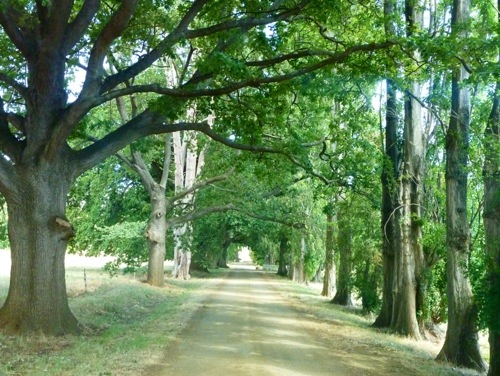
Then we arrived at Hobart and although it’s nothing compared to Sydney, Melbourne or Perth, it is still noticeable more busy then anywhere we’ve seen sofar on Tasmania.

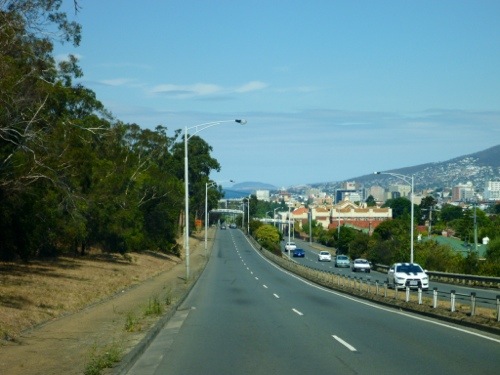
And it got even busier near the foreshore where the annual Regatta was in full play.


We skipped the first campsite south of Hobart as everyone seemed to congregate there and selected for the foreshore campground in Port Huon.

Apart from an awesome partner, friend, artist and cook, Marjo also seems to have a inbuilt clock that allows her to capture a nice sunset.

As well as the sunrise.
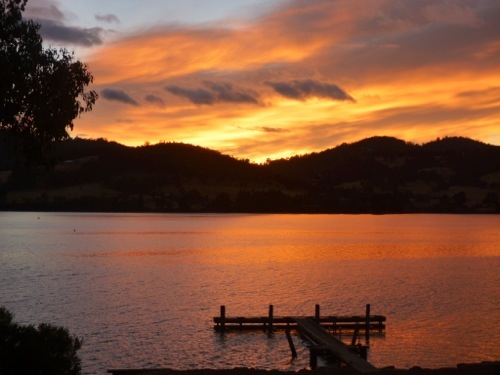


A great day.

February 10, 2013
Wayatinah Lagoon
We woke up with more rain, lucky drizzle this time. We pack up and head further south east.
As soon as we are on the road the clouds open.

And soon the sun comes out to steam dry the roads.

The road takes us through a national park and gives us nice views of streams and bush.


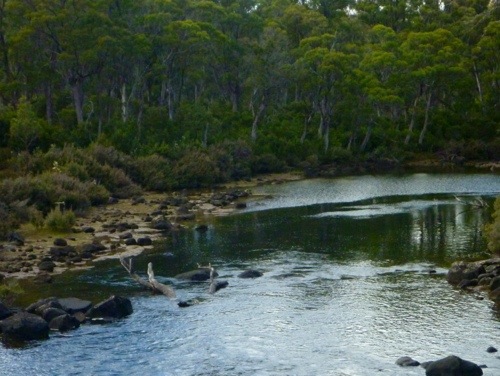
Then we come to Wayatinah dam, which is the end of a complex structure of dams and power generation.


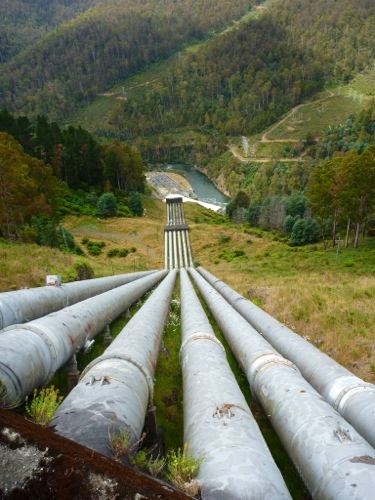
We decide that it’s time to do our laundry and have a proper hot shower and pull into the caravan park. Someone must have decided that it was not nice to have big trees in the dam.

And clearly couldn’t be bothered to remove the tree stumps after cutting them all down.
The recent rain made the surroundings all soggy so access to the water’s edge led to brown socks.

It was nice and quiet though and we were able to do all the laundry, take nice showers and had a good time. We didn’t try out the nice big pool after we saw that most kids and adults were wearing full wetsuits. We assume the temperature was not very appealing.
A nice day.

February 9, 2013
Lake Burbury East Foreshore
As soon as we packed up at Macquarie Heads it started to rain. The howling wind made it a horizontal rain and we left the hordes of quad bikers clad in yellow wet weather gear and took the 11 km of corrugated road back.
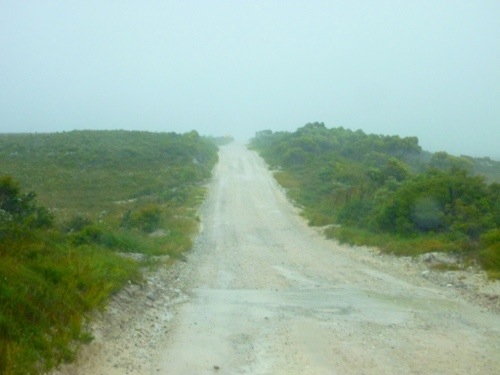
We visited the historic place called Queenstown and it has not much to offer. It’s clearly a mining town that has lost most of its glory.


On leaving town we saw a bright spot along the road that made us smile, despite the heavy rain.

Leaving town, the road went steeply up a hill and gave a watery view of town.


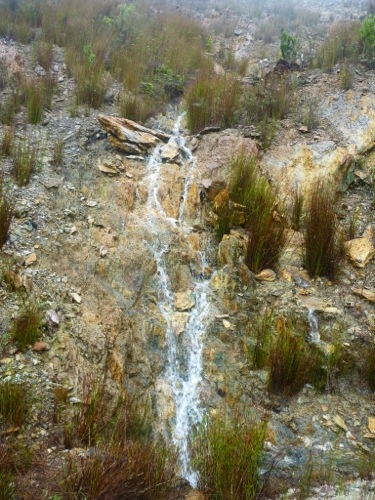
The wet rock face made for some pretty pictures.


And some mini waterfalls.

The lookout wasn’t as spectacular as we thought.


So we went down hill again.


We decided to go to the next nearest campsite and read a book in the bus.
When the rain stopped for half an hour it was time to walk the dogs.
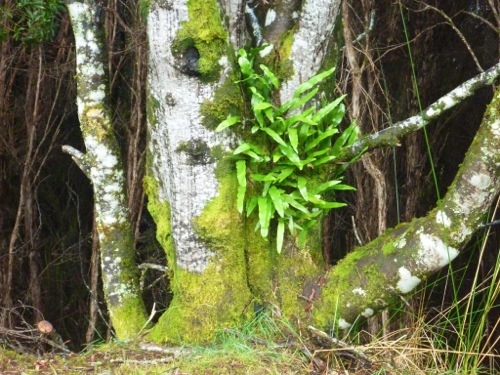


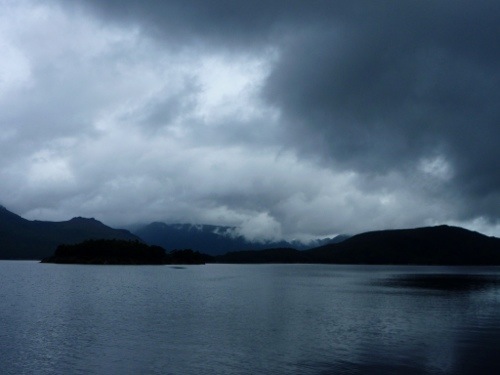
A lazy day.

February 8, 2013
Macquarie Heads
Leaving Mackintosh dam was not easy and with hindsight we should have stayed longer. But we didn’t. Slowly we packed up and moved down hill closer to the west coast.


Along the road we stopped at various falls, one nicer than the other.

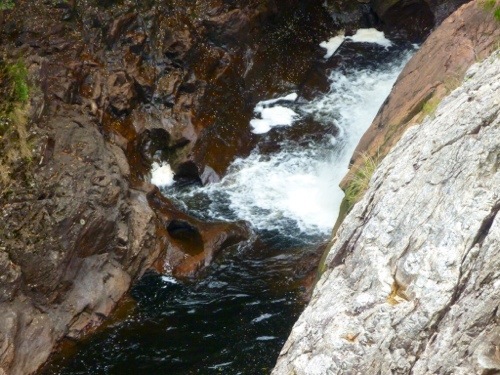
We also passed a Magnetite mine. Magnetite is the most magnetic of all the naturally occurring minerals on Earth. Naturally magnetized pieces of magnetite, called lodestone, will attract small pieces of iron, and this was how ancient people first noticed the property of magnetism.

Apparently this mine opened recently and has tight environmental restrictions. They will be fined $50,000 if within a period of 12 months more than one Tasmanian Devil is killed as a result. These and other restrictions seem required as in the past Tasmanian miners heavily polluted some of the pristine waterways.
We stop for lunch and a drink.
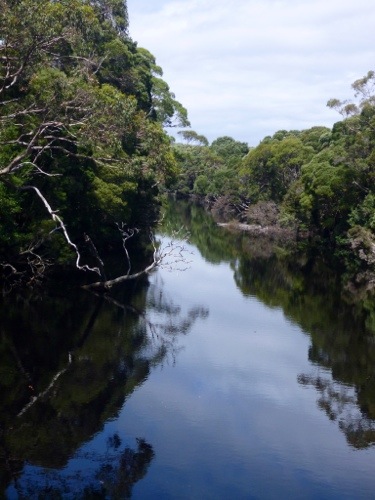

Then we see the west coast.

Suddenly we find out that Tasmania is indeed just a mini Australia, including a mini desert.

Nossi was suffering from dehydration and the unrelenting sun.

Then he suddenly tried to attract my attention.

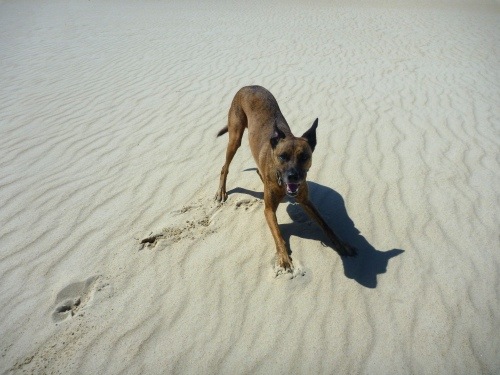
He searched left and right.


I had to find the passage back to the place I was before and finally Nossi succeeded.

It worked out to be just a massive dune and we returned safely to Marjo and Dotti.
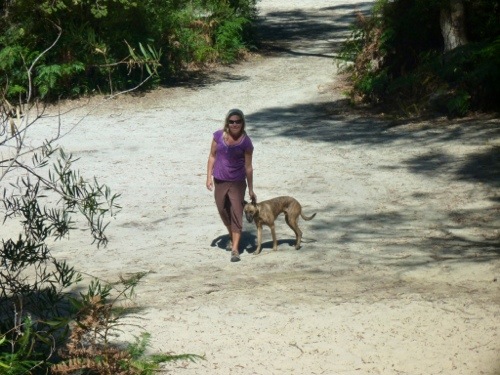
From there we drove to Strahan on the West Coast. We read about a nice bush camping and after 11 km of teeth shattering dirt road we made it into the campsite. The whole of country bumpkin west Tasmania must be here (behind every corner I expect to see a two headed specimen) as its Friday afternoon. There are quite a few campers and everyone has brought their dune buggy, cross bike, quad bike and 4WD to speed along the beach and across the dunes. That and the howling wind (Dotti squinting) plus starting rain keeps us close to the bus.

An interesting day.


February 7, 2013
Mackintosh Dam
We have seen enough of the North West coast and decide to go South. That means back tracking some of the roads that we have driven before but since we took the scenic road going west, we now take the quicker road back and slowly say goodbye to the coast and drives to the hills.


Lucky for us Tasmania is littered with lakes and rivers so we are never far from water.


Soon the scenery changes to more lush, rainforest type trees and ferns.


We stop at a potential campsite and although the scenery is beautiful, thee is still an abundance of bees. That’s not bad when you’re walking but as soon as you sit still they’re everywhere. After a nice walk and lunch we have enough and move on.


The road takes us further up the mountains.

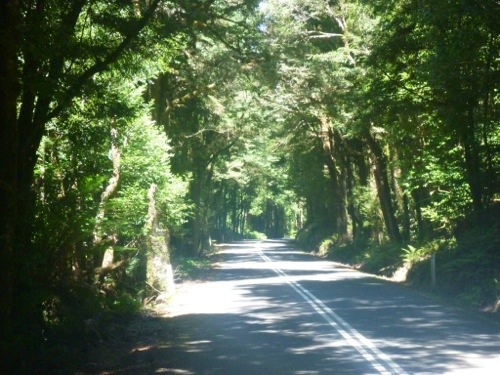
Until we come to Waratah Falls.

And there’s a reason why it’s called that, because the falls are smack in the middle of town.

It amazes me how they built the falls in the middle of town when Marjo helps me out of the dream, it was the other way around. Apparently some time ago Tin was discovered at Mount Bischoff by James “Philosopher” Smith in 1871. The mine operated successfully at first and he built an extensive hydro driven installation to separate the tin from the ore. Later he added power generation and a village was born. The easy ore was all extracted by 1893 when sluicing was discontinued. Mining continued opencut on the face of the mountain, and underground. The underground mine closed in 1914, but surface mining continued for some time before it also ceased after the price of tin slumped in 1929. (Source Wikipedia).
By now the town is in decline as there’s not much apart from the waterfall.

We decide not to stay at the forlorn campground and continue deeper into the mountains.
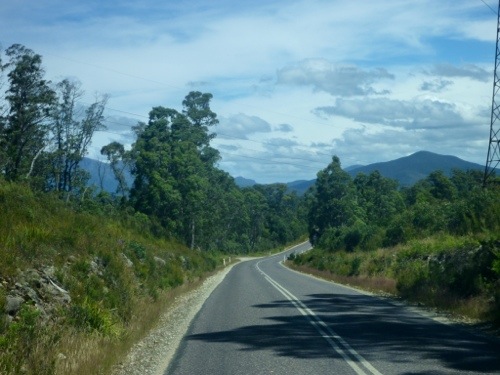


We arrive at Mackintosh Dam, cross the dam and look at camping options around the lake.


Then we find a good spot and can finally relax.


The place is nice to swim and frolic.


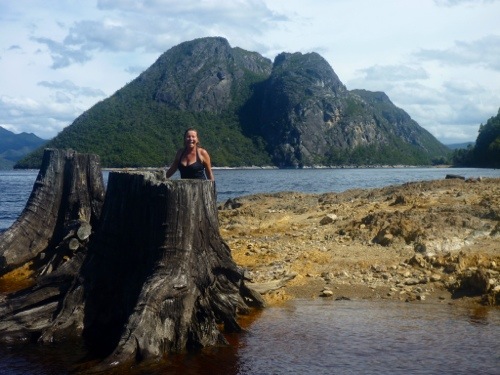


Mackintosh Dam is a very nice place and very quiet. All you hear are the birds.


It’s also great for walks.


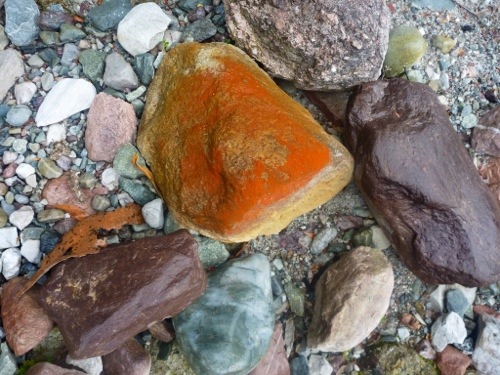


A truly magical stay.

February 6, 2013
Montagu Bay
We are getting close to the end of the bitumen road in the north west. Well there’s Arthur River but we’ve been warned of the swarms of horse flies there. With my love for buzzing and stinging animals we decided to not go there. So we do another loop inland to the South Arthur Forest. We hope that the Arthur River near the Kanunnah bridge is a nice place to stay.
We leave slowly and decide first to go kite boarding again as the wind is good and the beach nice.


After leaving we first visit Stanley to look at the Nutt up close and are not that impressed.


It could be that we were both a little tired from the kite boarding that morning or it must still have been the buzz of the kiting.
So we decide to visit Smithton for some groceries and then to a wood working place. Truly nice.

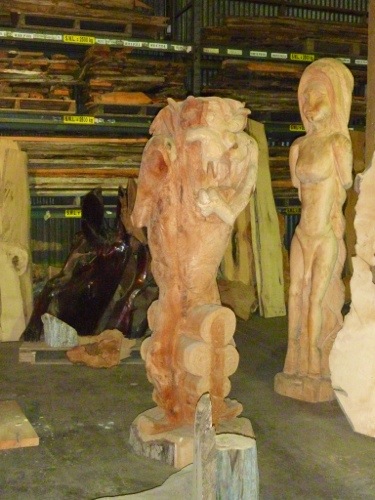
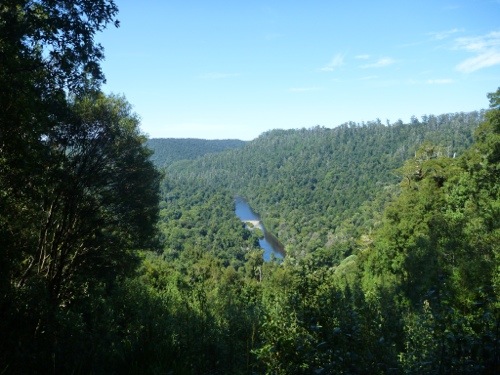
Then we drive down a winding and hilly road past Edith Creek and Roger River towards the Kanunnah bridge.


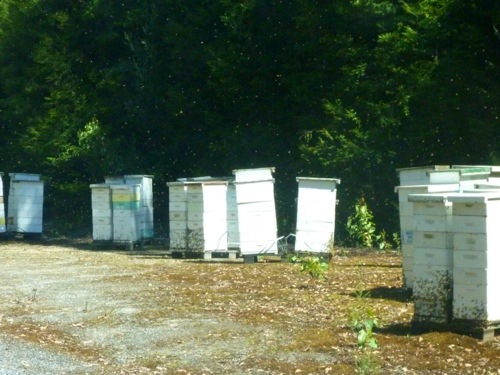
We pass nice places and enjoy the various bee hives along the road.
Then we arrive at the campground and the surroundings are quite nice. There’s less water in the river than we expected but still enjoyable.


Nossi got a bit too interested and went in head over heels. Lucky he got out pretty quick and left nice swirl marks on the water.

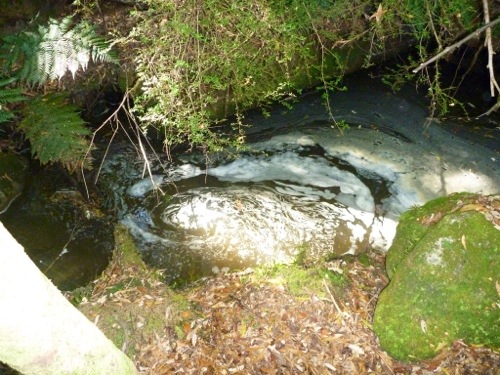
Soon we found out why we were the only people interested in the deserted bush camping. It started with one, but soon we and the dogs were driven back into the bus by an increasing number of bees. The friendly people leaving beehives all over the forest hadn’t thought that the bees would also be interested in unsuspecting campers.
We looked at a few other spots in case the bee infestation was local but quickly decided that this forest is not for us.
We were leaving before dusk and didn’t encounter any living devils.

And made it back again to the coast. We decided to drive on to Montagu in the hope of more kiting. The campsite was nice, but there was no beach, only rocks.


A great day.
February 5, 2013
Peggs beach
From Pioneer campground we decide to go to Burnie where the Makers are promoted and so we drive past more valleys till we reach the ocean again (mind you, all that in less than half an hour).

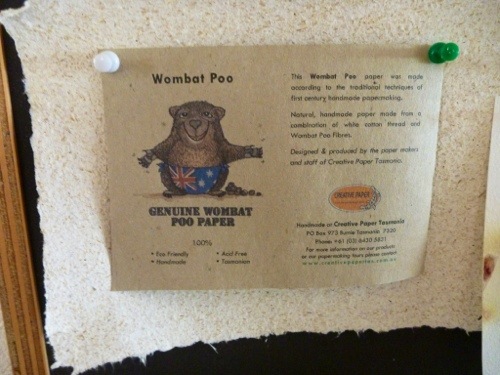
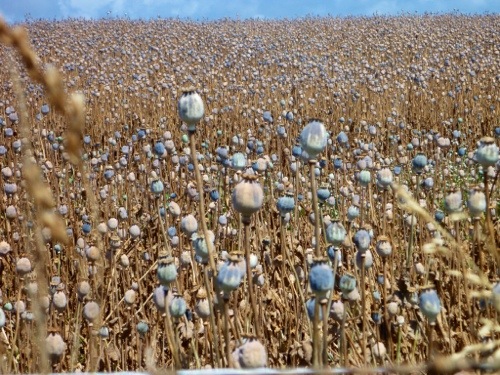
The Makers is an initiative to promote local industry and specifically those that produce unique items. So there’s the information about the poppies…

…paper production…

…the wood used for the pulp…
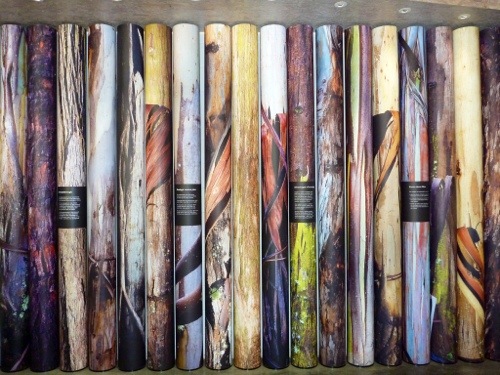
…and the artistic figures created from the paper mâché…


But also the local Caterpillar mining equipment manufacturer Elphinstone (who incidentally just laid off 100 people in Burnie by moving the work to cheap labour in Thailand).

After we had a nice cappuccino (Marjo) and warm apple pie with cream (Axel) we moved inland once again to look for a better waterfall. Only 27 km’s and several poppy seed fields later we were rewarded.


Marjo wanted to check them out in close up.
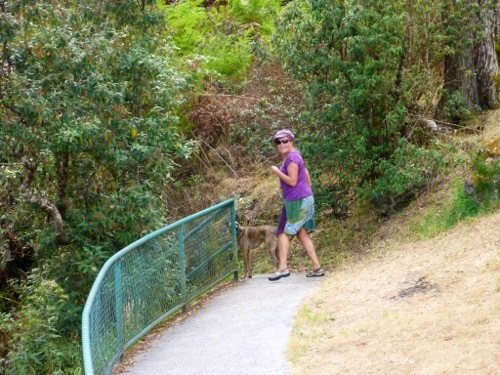
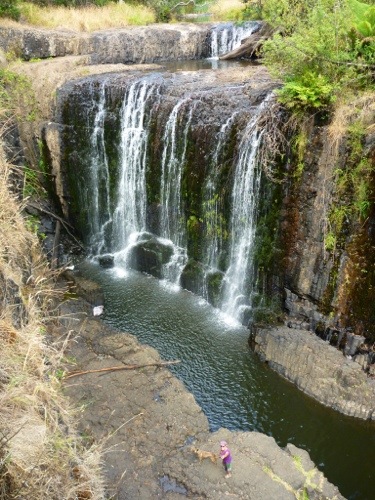


And I must agree these Guide Falls are nicer than the Preston Falls we saw yesterday.


Meanwhile we waited at the top.


We looked at a few of the nice trees.


And then headed for Wynyard, a friendly, colourful town.

There we saw more poppyseed fields, tulip farming (they actually export to The Netherlands!) and a nice lookout.


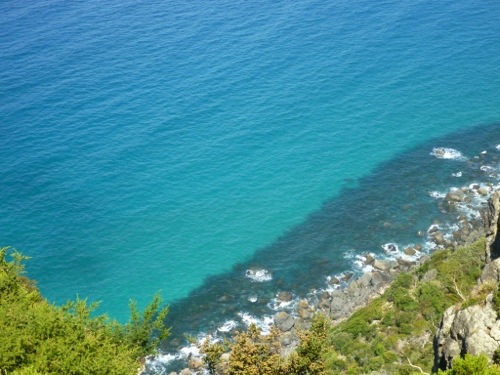

Accidentally we also found the founder of the Alexander technique that my dad is quite familiar with.

Then we decided to drive to Boat Harbour beach which was suggested by a fellow ferry traveler when we made the journey from Melbourne to Devonport. It was nice indeed.


And up close even better.


Then we came to Peggs beach, a bush camping near Stanley with toilets and water (not potable) and a kite beach. We camped next to a guy from Germany who travelled with his daughter in a vintage French combo.

We enjoyed the stay with kiting, and walking the beach.
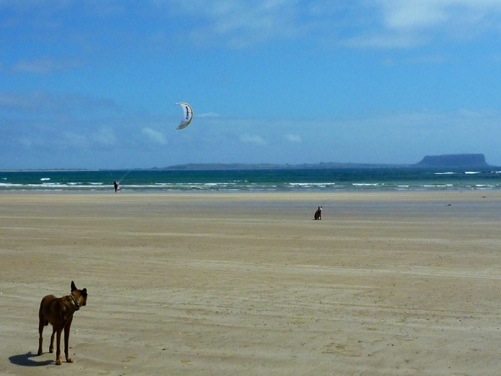


Such a nice place, we decided to stay two nights.

February 3, 2013
Pioneer camp
If there’s no kiting to be had then we’ll better move on. Kidding, the location is nice but quite exposed to wind, sun, the railroad track and the road. Also we want to explore more and after the coast it’s time to try a little inland. To do that we backtrack a few kilometers and go South.
We drive up and down a few times to locate the dump point in Penguin but then we finally say goodbye.

One of the nice parts of Tasmania is that it’s small (only 1.6 times The Netherlands with about 2.5% of the population) everything is close by, so in no time our scenery changes from beaches and coast line to winding roads and mountains.

We drive past a nice scenery of Dutch looking cows and many fields of poppy seeds.

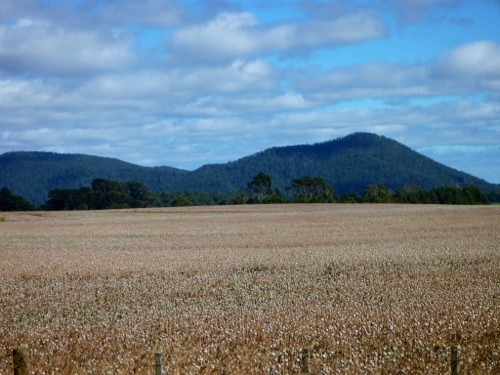
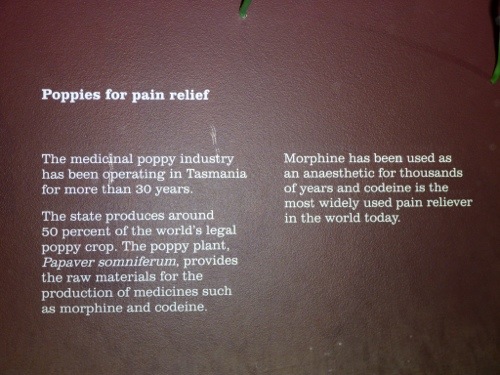
They say that Tasmania is the largest exporter of poppy seeds for medicinal purposes (codeine and morphine) and I believe that, we have not seen too many drug heads here.
We see that we were not the only ones who kept a horse as a pet, however we never used it to guard our property.

Then we reach our first destination and Marjo is a bit disappointed with the size (aren’t we spoiled).


When we drove on Nos refused to lie between the front seats as he normally does and instead jumped on our bed and stared out of the back window. He must have been moody because he started this morning already anxiously when we drove off.

We then proceeded further south to look at Leven canyon. The name aroused our interest as “Leven” is the Dutch word for “Life” so there must be some Dutch connection. There’s not much written about this, the closest we could find is the following:
Prior to 1840, unlike much of Northern Tasmania, the central north coast was not regarded by Europeans as being fit for habitation and agricultural purposes.
The region where the town of Ulverstone is situated was originally called Badger Plains & Cotton but assumed the names Leven & River Leven after the river which was probably named in the 1820’s by explorers/surveyors from the Van Diemens Land Company.
When we arrived, Marjo, Nossi and I decided to leave Dotti to guard the bus and take a short walk down hill to the lookout.

There are two paths there and I blame the poor signage where Marjo thinks I need new glasses or look more carefully. The first stop was nice with a beautiful walk.


And a very nice view.


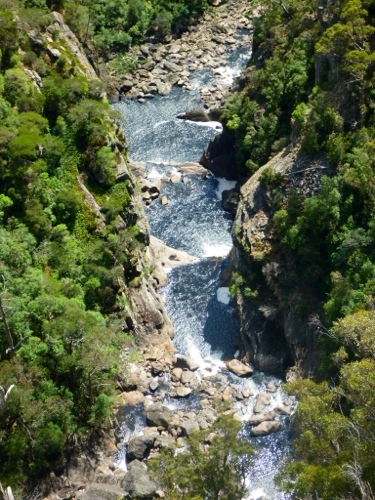


(Panorama view).
Then I knew a short cut up some stairs to the other view which saved us walking all the way back uphill to the car park. Nos was eager to go.

The first rest stop confirmed that it was not far. But the fact there was a rest stop should have been enough warning.
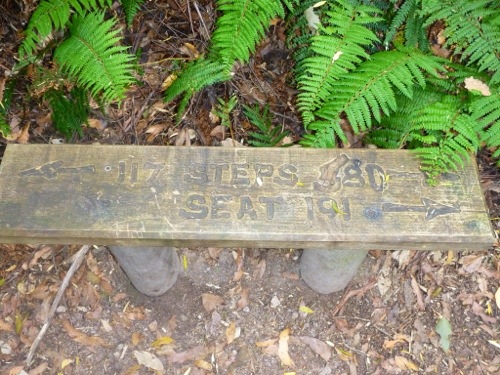
And hey, who thought that the weird scribble in front of the 80 was a 5? Ok, the 191 to the next seat was a giveaway, but now you’re talking too much detail.
Well, three rest stops later, we finally reached the other view.


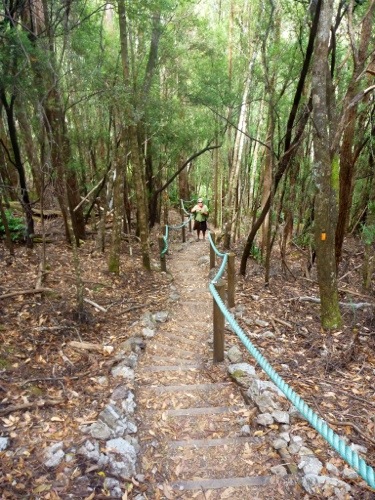
I still say it was worth it.


Marjo says she agrees but that walking the other way around would have been the sensible thing to do.
We were all glad to see Dotti again.

And really enjoyed our lunch and had a Kodak moment.
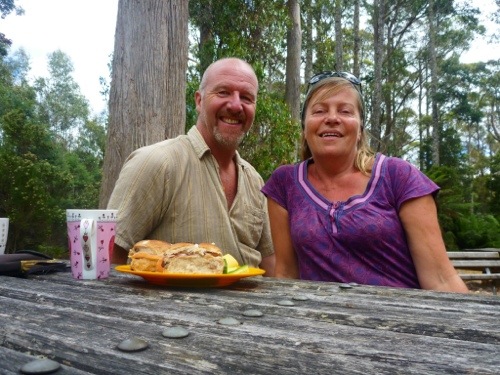

The road from the Leven canyon back to the coast was very nice and we stopped for photo opportunities and some free snack from the side of the road.
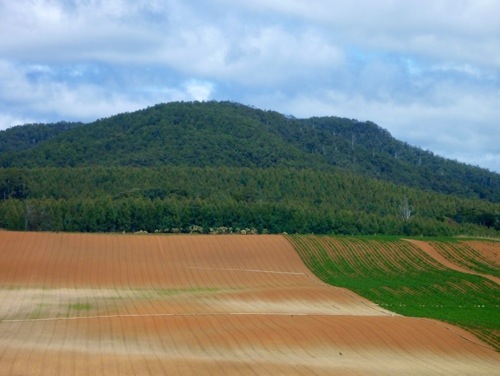


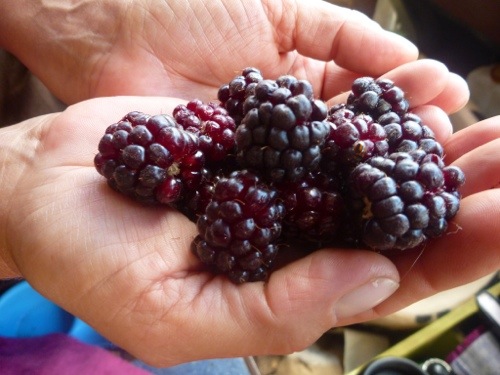


Then we reached the nice Pioneer campground, nicely maintained by volunteers and found a great spot.

Nossi checked out the playground and Marjo checked out the surrounding nature.


A fabulous day.

Recent Comments