
After an early morning of watching boulders turn red (a bit like watching paint dry or grass grow), we have lazy breakfast and a slow start. Marjo gives highlights of Eastern Australia to a youngish couple from Italy who are heading back to Brisbane from Devil’s Marbles so their trip can benefit from the highlights of our trip while I pack up. Despite doing everything s l o w l y , due to our early rise, we’re on the road by 9 am.
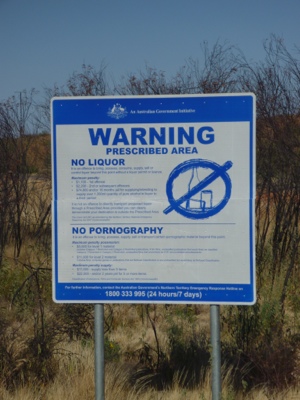
On the way we shed some weight. First we need to rid ourselves from our liquor and pornography. The NT folk are a restrictive bunch, but I guess everyone has read about the child abuse in aborigine communities related to alcohol consumption. Also we had to finish all our fruit to prevent fruit fly entering the region. As if the little cretin’s can’t fly there?
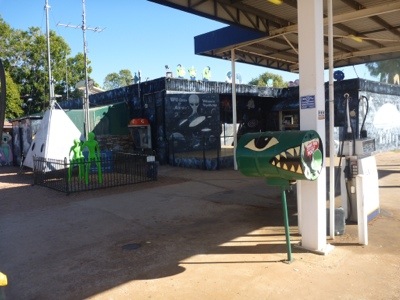
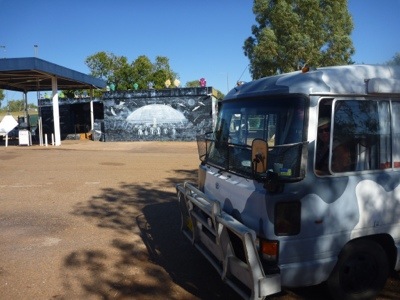
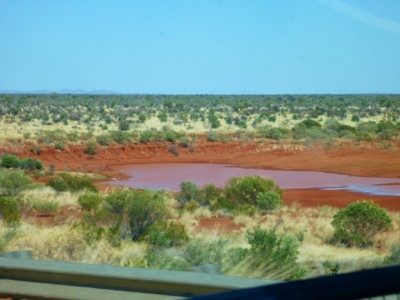
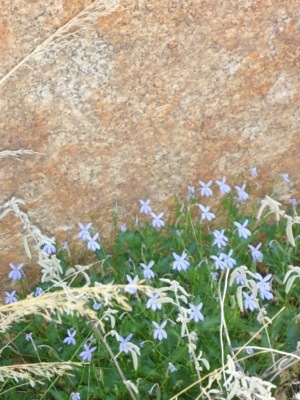
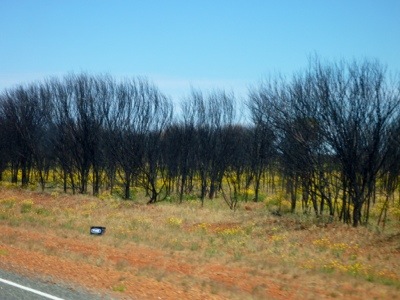
The road is more varied, providing some distraction from the monotone kilometers. First some nice red mountains, then a real UFO centre near Wycliffe Well, a deep red billabong and even yellow flowers! It being winter all we have seen is dull colors like brown, grey and flat green. It seems spring is upon us?
We look at various camp options before Alice Springs and dismiss the rest areas as not dog friendly. Northern Terrorists (or whatever they’re called) don’t seem to have much respect for things (including the environment). Every 50 km or so there’s a small closed building beside the road, perhaps to control the radio repeaters, powered by solar. You see them in Queensland as well as here. The difference is though that in NT they invariable have all the solar power panels missing. And I don’t believe that, because it’s more sunny here the installation can work without the panels. So they must have been nicked.
Also it is remarkable the number of bottles, cans and beer boxes you can find on the side of the road.
Most rest areas here also have broken glass which is not very friendly for our dogs. One of the rest areas has a story about the inland sea of thousands years ago and a stunning satellite picture showing the dunes of the desert not far from here and the geological structures.
When we see a sign 68km east to Gemstone to do your own fossicking, we’re easily convinced that a 136 km detour is nothing after all this driving. So we go down the Plenty Highway down a single lane bitumen road and arrive an hour later at Gemtree park. A nice campsite where we spend the night.
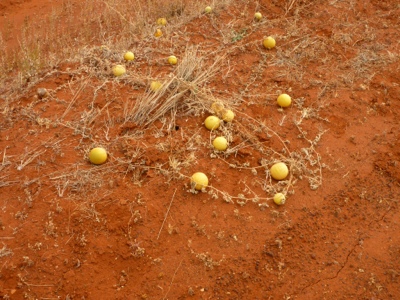
Gary, the guy who drives in front of us on his quad bike to point out where we can park the bus knows the answer on the yellow balls: paddy melons (like in paddock). They are apparently quite bitter and no one eats them. When we look closer (and not zooming past) we can indeed see that they just grow along the side of the road.
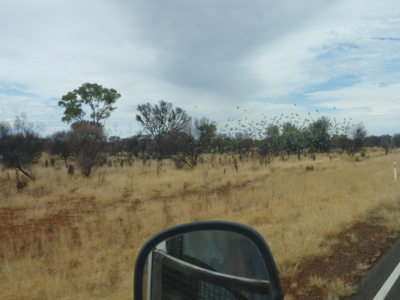
Since turning onto the Stuart Highway we have seen flocks of the little birds that we photographed while drinking water at a rest area.
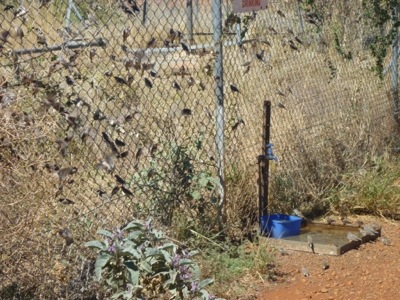
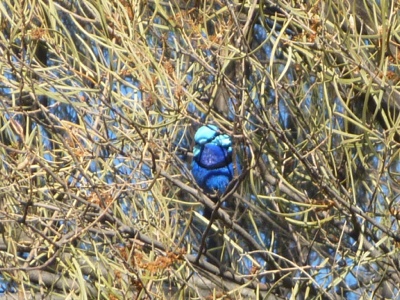
These birds are tiny and fly in flocks and – somewhat like dolphins accompanying a boat – these birds weave and dive in formation around the car. A beautiful sight. We have seen them in green, but now we’re seated at the Gemstone park a little blue bird seems courageous to come within photo distance.
Instead of taking fuel ($2.25 per liter), and getting a bucket of stone that might or might not contain gems ($30) we decide to take a shower, let the dogs walk themselves, order fish and chips and settle in for the night.
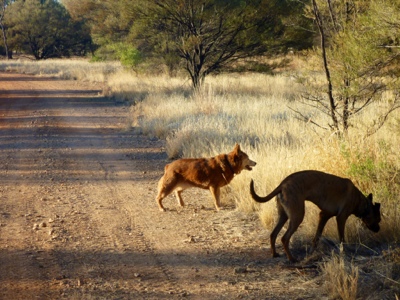
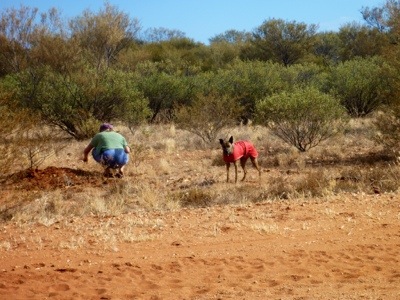
That morning we have the first day where the sky is not completely blue. There’s overcast and it is bitterly cold (17 celcius). We decide to do fossicking on the Dutch. Meaning we drive down the area where they find gemstones (near the mudtank) and look around for pretty stones. After half an hour Marjo has a few pretty ones and we say goodbye to Gemstone.
Posted from Anmatjere, Northern Territory, Australia.

From